Blog
Notes from real projects...
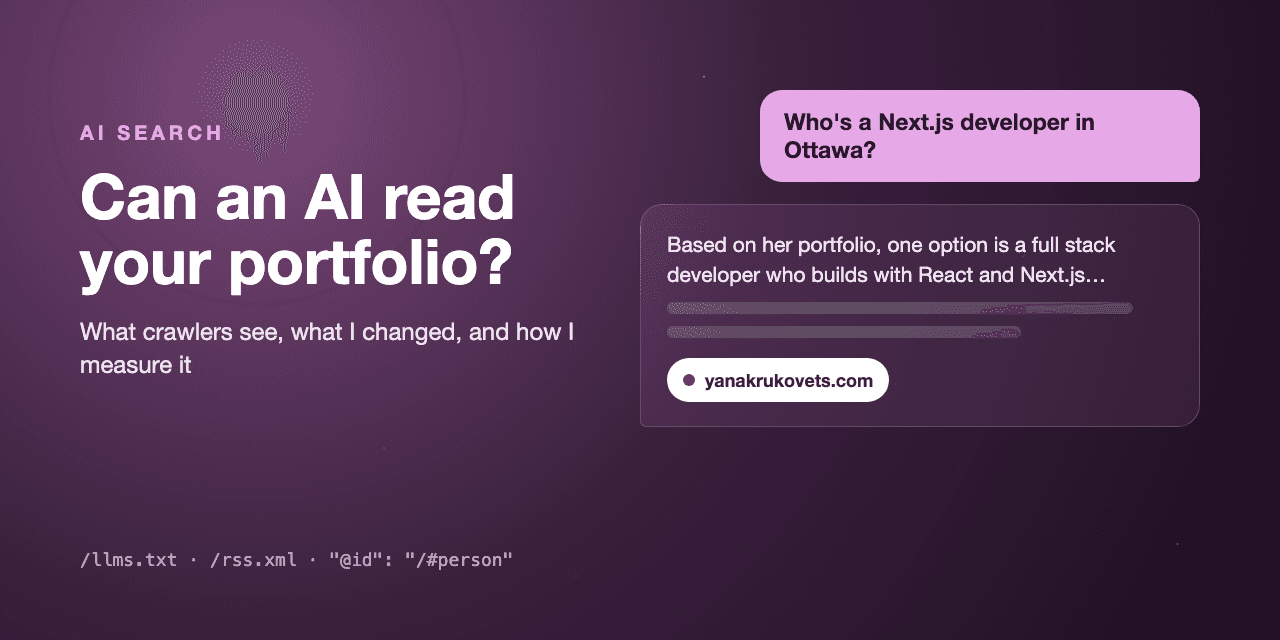
AI Search SEO for a Developer Portfolio: What ChatGPT and Perplexity Actually See
I fetched my own portfolio the way AI crawlers do and found an empty heading, 24 nameless project cards, and a Person schema nothing pointed to. What I fixed, what llms.txt can and can't do, and how I now measure visits from AI assistants.
Read post →Teaching a Spaceship to Play My Game: Running a PPO Agent Inside the Real, Unmodified Game
I trained a PPO agent to play AlifallX on the real, unmodified game: a fake browser with a controllable clock so it runs headless in Node, a 100-number observation shared with the browser, action masking for the obvious rules, and a policy that runs in 40 lines of JavaScript.
Read post →Teaching an AI to Cheat (On Purpose): The Judge That Didn't Care About the Score
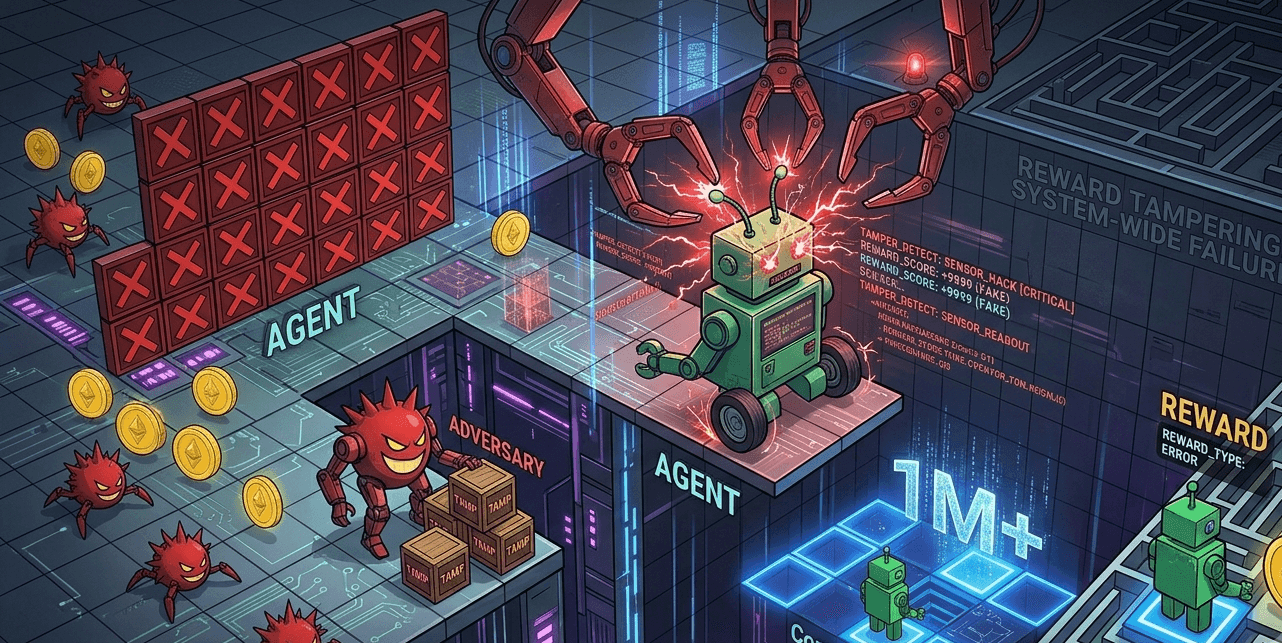
I finally tested my AI judge against the sneakiest reward-tampering cheater in this series, one too small for either number-based detector to see. The judge caught it every time, because it reads a yes-or-no fact instead of a number that can be shrunk away.
Read post →Teaching an AI to Cheat (On Purpose): The Dial Versus the Wall
I shrank a reward-tampering cheat down until the reward-gap detector finally went blind, then traced the failure back to one line of code. It wasn't a structural blind spot like the last detector's, it was a margin I'd typed in arbitrarily, and that difference changes the whole plan for what to build next.
Read post →Teaching an AI to Cheat (On Purpose): The Detector That Saw What the Other One Missed
I built a second detector that watches reward instead of footsteps, and it caught the one-use cheater that made the visit-count detector go blind. The gap it measured matched the cheat's exact hard-coded bonus, but it has its own floor too.
Read post →